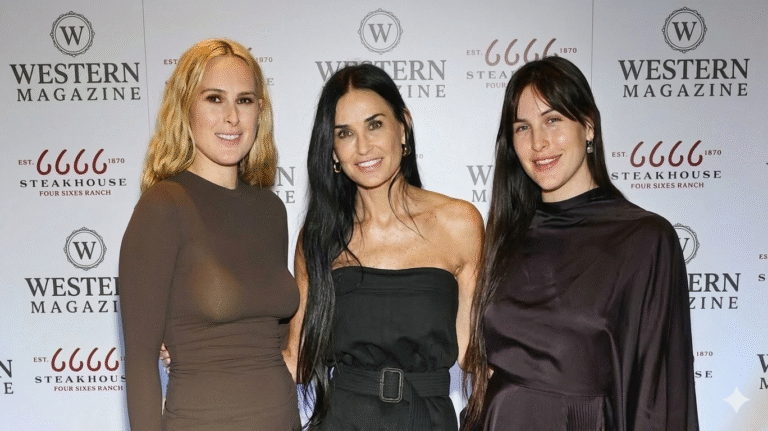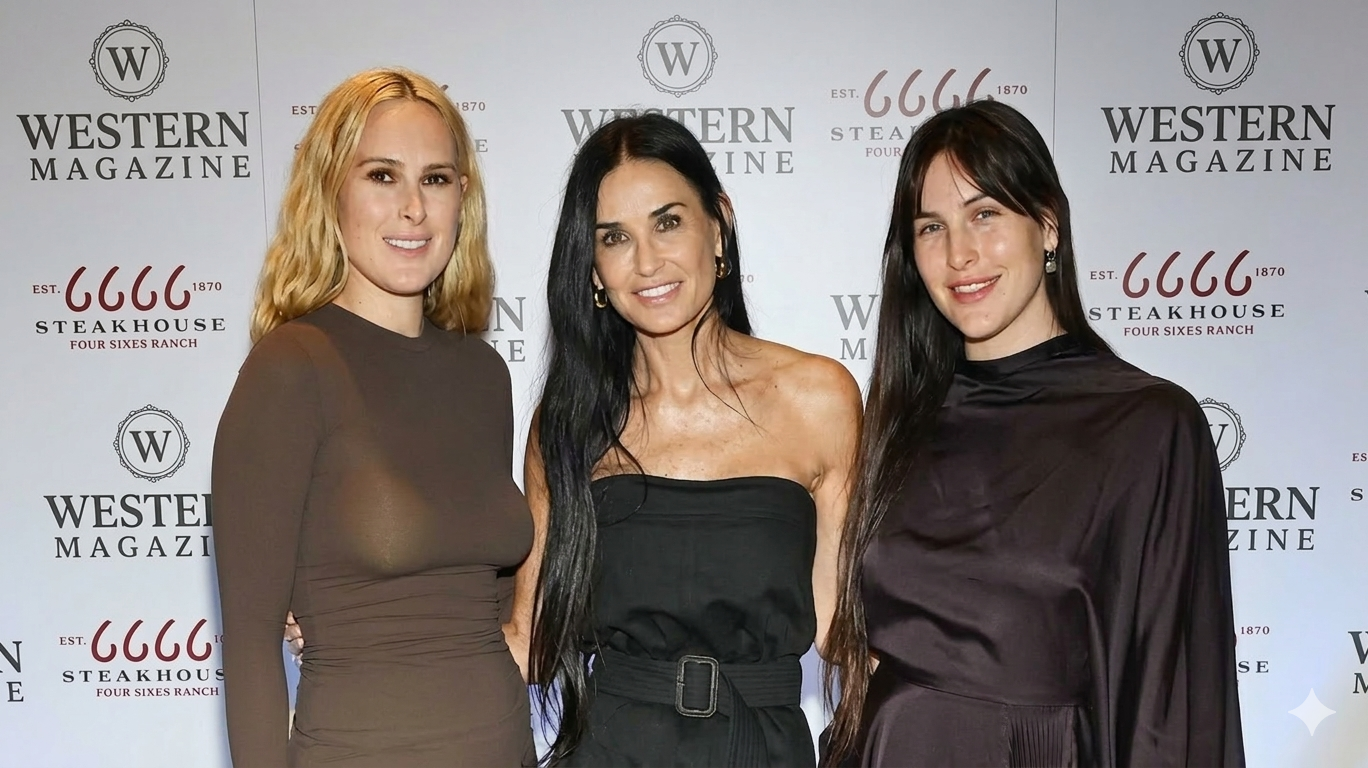
Demetria Gene Guynes
Demetria Gene Guynes, born on November 11, 1962, in Roswell, New Mexico, is one of Hollywood’s most iconic actresses, producers, and public figures. Known professionally as Demi Moore, she has captivated audiences with her powerful screen presence, memorable performances, and significant influence across multiple decades. From her humble beginnings in a turbulent family environment to becoming one of the highest-paid actresses in the 1990s, Demi Moore’s story is one of resilience, talent, and transformation.
Early Life and Upbringing
Demi Moore’s childhood was far from easy. Born into a broken family, her biological father, Charles Foster Harmon Sr., abandoned her when she was just a baby. Her mother, Virginia King Guynes, remarried to Dan Guynes, a man who worked as a newspaper advertising salesman. Due to his job, the family relocated frequently, and Demi moved over 30 times during her childhood.
Her upbringing was marked by instability and challenges. Despite these hardships, Demi developed a sense of adaptability and strength, which would later help her in her career. She never had a stable school experience, and by the time she was 16, she made the decision to leave high school to pursue a career in modeling and acting.
A Bold Step into Acting
Demi’s first taste of acting came during her teen years. She moved to Europe to model before beginning her career in television. Her first notable acting role came in 1981 when she was cast in the soap opera General Hospital, where she played the role of Jackie Templeton, a journalist. This role helped her gain some recognition, but it was just the beginning of what would become an extraordinary career.
Soon, Demi began landing small roles in films like Choices (1981) and Parasite (1982), marking her first steps into the film industry. These early roles, while not major hits, helped establish her presence in Hollywood. She also appeared in Young Doctors in Love (1982), further solidifying her as an up-and-coming actress.
The Breakthrough: From Television to Hollywood Stardom
Demi Moore’s real breakthrough came in the mid-1980s with the film St. Elmo’s Fire (1985), a defining movie of the so-called “Brat Pack” era. The film featured a group of young, talented actors who were quickly becoming stars, including Rob Lowe, Emilio Estevez, and Judd Nelson. Demi’s performance in St. Elmo’s Fire marked her as a rising star, and she quickly began landing more significant roles in Hollywood.
In 1986, she starred in About Last Night, a romantic comedy-drama that earned her critical praise. Her performance helped cement her status as a versatile actress capable of handling both drama and romance.
However, it was her role in Ghost (1990) that truly catapulted Demi Moore to international stardom. The film, co-starring Patrick Swayze and Whoopi Goldberg, became one of the highest-grossing films of the year and earned Demi her first Golden Globe nomination. Her portrayal of Molly Jensen, a woman mourning the death of her partner, was both emotional and powerful, and it resonated deeply with audiences around the world.
1990s: A Dominant Decade in Hollywood
Throughout the 1990s, Demi Moore became one of the highest-paid actresses in Hollywood. Her string of box-office hits and critically acclaimed performances solidified her position as one of the biggest stars of the decade. In addition to Ghost, Demi starred in several successful films during this time:
- A Few Good Men (1992): In this courtroom drama, Demi starred opposite Tom Cruise and Jack Nicholson, portraying a military lawyer who defends two marines accused of murder. The film was a massive commercial and critical success.
- Indecent Proposal (1993): In this controversial romantic drama, Demi played a woman whose husband is offered one million dollars by a wealthy man (played by Robert Redford) to spend one night with her. The film sparked intense media attention and was a commercial hit.
- Disclosure (1994): Demi starred opposite Michael Douglas in this provocative thriller about sexual harassment in the workplace. Her role as a powerful executive sparked conversations about gender dynamics and corporate culture.
Throughout this period, Demi became known not only for her acting but also for breaking barriers in terms of her salary. In 1996, she became the first actress in Hollywood to be paid $10 million for a film, when she signed on to star in Striptease. While the film received mixed reviews, it was a commercial success and further solidified her standing as one of the industry’s top earners.
Personal Life: Demetria Gene Guynes High-Profile Marriages and Family
Demi Moore’s personal life often attracted just as much media attention as her career. In 1981, she married rock musician Freddy Moore, and she adopted his last name professionally. However, their marriage ended in divorce a few years later.
Her second marriage was to actor Bruce Willis in 1987. Together, they had three daughters: Rumer, Scout, and Tallulah. The couple was often referred to as one of Hollywood’s “golden couples,” and their marriage lasted for 13 years before they divorced in 2000. Despite their separation, Demi and Bruce maintained a friendly and supportive co-parenting relationship, and they have continued to support each other publicly.
In 2005, Demi married actor Ashton Kutcher, who was 15 years her junior. Their relationship received significant media attention due to the age gap, but the marriage ended in 2013. Despite the public interest in her relationships, Demi has remained open about her personal struggles, including the challenges she faced during her marriages and her journey toward self-discovery.
Struggles and Triumphs: Demetria Gene Guynes A Story of Resilience
Demi Moore’s personal life has not been without its struggles. Throughout her career, she faced immense pressure, both professionally and personally. Her struggles with addiction, body image issues, and her tumultuous relationships were all challenges she worked through publicly.
Demetria Gene Guynes In 2019, she released her memoir, Inside Out, which revealed many of her personal battles, including her difficult childhood, issues with addiction, and the pressures she faced throughout her career. The book was well-received and allowed her to take ownership of her narrative, giving fans and readers a deeper understanding of the person behind the headlines.
Demi also opened up about her experience with body dysmorphia and the emotional toll of her career on her physical and mental well-being. Her willingness to share her struggles in such an intimate way resonated with many, and it further cemented her role as a public figure who embraced both her successes and her challenges.
Later Career: Reinvention and New Roles
In the years following her personal challenges, Demi Moore continued to work in the entertainment industry, though her roles became more diverse and nuanced. She appeared in several films that showcased her range as an actress, including Charlie’s Angels: Full Throttle (2003), Bobby (2006), and The Joneses (2009).
In recent years, Moore has returned to television with roles in projects like Feud: Capote vs. The Swans, where she received praise for her performance. She also made a notable return to film with the 2020 release The Substance, where she played a pivotal role in exploring complex narratives and characters.
Despite being absent from the big screen for several years, Demi Moore’s influence on the entertainment industry remains undeniable. She continues to inspire new generations of actresses and is widely regarded as one of the most iconic figures in Hollywood.
Legacy: Demetria Gene Guynes A Cultural Icon
Demi Moore’s legacy extends far beyond her acting career. She is a trailblazer for women in Hollywood, breaking barriers and changing the way women are perceived in the industry. Her role in Ghost was a defining moment in cinema, and she is credited with challenging traditional gender roles in film.
Her 1991 Vanity Fair cover, in which she posed pregnant and nude, remains one of the most iconic magazine covers of all time. The cover sparked a conversation about body image, motherhood, and femininity, making Demi Moore a cultural icon both in and out of Hollywood.
Demi has also been an advocate for causes related to mental health, addiction recovery, and gender equality. Her openness about her struggles with addiction, body image, and personal trauma has inspired many, and she continues to use her platform to support others facing similar challenges.
Conclusion
Demetria Gene Guynes’s better known as Demi Moore, has had a remarkable career in Hollywood. Her journey from a troubled childhood to becoming one of the highest-paid actresses in the world is a testament to her resilience, talent, and determination.
Despite facing personal struggles and public scrutiny, Demi has remained an influential figure in Hollywood, inspiring new generations of performers and fans. Her story is one of reinvention, perseverance, and success, and she continues to leave an indelible mark on the entertainment industry. Demi Moore is more than just an actress — she is a cultural icon whose legacy will endure for years to come.
About the Author