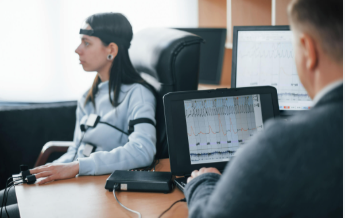
Polygraph Test
Let’s be honest—just hearing the words “polygraph test” can make your stomach twist a little. Maybe it’s the thought of some machine reading your deepest secrets, or maybe it’s that awkward image of you sweating under a dim office light while someone scribbles notes. Whatever the mental picture, polygraphs have a way of making us uneasy. And yet, they’re still used in jobs, law enforcement, and even TV shows that dramatize their “truth-telling magic.”
But here’s the thing: what actually happens during a polygraph test, and how much can you really trust it? Let’s take a closer look.
The Mechanics Behind the Machine
At its core, a polygraph isn’t some mind-reading device. It’s a set of sensors that track physiological responses—heart rate, blood pressure, breathing, and skin conductivity. The idea is simple: when you lie, your body reacts. Your heart might beat faster, your palms might sweat, your breathing can change. The machine records these changes as a graph, which the examiner interprets.
Now, here’s a little scenario. Imagine you’re asked a seemingly innocent question like, “Did you take the money from the office?” Even if you didn’t, the anxiety of being accused might spike your heart rate. The polygraph picks that up. That’s why polygraphs aren’t foolproof—they’re reading your body’s reactions, not your brain.
How the Test Usually Goes
A polygraph session isn’t just strapping yourself to wires and hoping for the best. There’s a lot of preparation that goes on first. Examiners usually start by explaining the process, asking baseline questions (“Is your name John?” “Are you sitting down?”) to measure your normal responses.
Then come the relevant questions. These are direct, often emotionally charged, questions about the issue at hand. A skilled examiner will also throw in control questions—ones they know the answer to—to compare reactions. The goal isn’t just to see if you lie but to detect deviations from your normal responses.
One friend of mine went through a polygraph when applying for a government job. She told me afterward, “It felt like the machine was watching my soul.” In reality, it was just her body responding to stress. The examiner later told her that nervousness, not dishonesty, could make results tricky. That’s the human factor—stress is messy.
Can You Fool a Polygraph?
Here’s where things get interesting. Popular culture loves to show people sweating, fiddling, or taking deep breaths to beat the machine. In reality, fooling a polygraph is harder than most movies make it look—but not impossible.
Some methods aim to control breathing, flex muscles, or think of neutral things to calm physiological responses. But here’s the catch: examiners are trained to spot attempts at manipulation. More importantly, these tricks don’t guarantee success. Polygraphs are far from perfect, and accuracy rates vary depending on the examiner’s skill, the type of questions, and the examinee’s emotional state.
I’ve met a former law enforcement officer who swore by the “honest stress” theory. He said, “A lot of people fail because they’re scared, not because they’re lying. Your body just doesn’t lie about fear.” That perspective highlights why polygraphs are controversial in courts—they can’t definitively prove guilt or innocence.
The Legal and Job-Related Side
Polygraphs pop up most often in law enforcement, security clearance investigations, and certain high-risk jobs. Some employers even use them to vet new hires, though that’s controversial and legally restricted in many places.
Why? Because, again, a polygraph measures stress reactions, not truth. Someone might fail simply because they’re anxious, not because they’re hiding something. On the flip side, a calm, practiced liar could theoretically pass.
It’s worth mentioning that courts in the U.S. rarely accept polygraph results as evidence. Judges know the margin of error is too high. In other countries, the rules vary, but the skepticism is universal among legal professionals.
The Psychological Twist
Part of what makes polygraphs so compelling is psychological. The test itself can feel intimidating, and that fear can make people confess—even if they’re innocent. That’s a huge part of why examiners are trained to maintain a calm, neutral demeanor. They want accurate readings, not to terrify the person on the chair.
Consider this: you walk into an office, wires strapped to your chest, a clipboard in the examiner’s hands. Even before questions start, your body is reacting. That tension alone can make your responses more pronounced. Some people sweat, some blush, some freeze. The machine picks all of it up.
I’ve seen folks describe it as a mental marathon—every question feels heavier than the last. And sometimes, just talking honestly about a sensitive topic can spike your readings. Human emotion is messy; that’s part of why polygraphs aren’t definitive.
My Take on Polygraphs
Here’s my personal view: polygraphs are tools, not truth machines. They give examiners clues, a starting point, not a final verdict. The combination of physiological responses, human judgment, and context makes them useful in some cases—like pre-employment screening for high-security roles—but downright unreliable as a lie detector in isolation.
Also, polygraphs are fascinating because they reveal more about people than just lies. Nervousness, stress, and honesty all leave traces on the body. A polygraph can feel invasive, sure, but it’s also a mirror of our most basic reactions. That’s kind of poetic if you think about it.
Practical Advice if You Face One
First, breathe. Seriously. You can’t fake your body’s reaction perfectly, but staying calm helps both your comfort and the accuracy of the results.
Second, answer honestly. Stress spikes happen regardless, but honesty reduces the chance of compounding reactions.
Third, understand that it’s not the end of the world. Most polygraphs are just one step in a broader investigation or hiring process. They’re not magic, and a “failed” test doesn’t always mean failure elsewhere.
Wrapping It Up
Polygraphs have a reputation that’s part fear, part fascination. They’re tools that attempt to read your body’s subtle reactions, not your mind. They can hint at deception, but they’re far from infallible.
At the end of the day, what matters most isn’t whether the machine can tell a lie—it’s how we respond under pressure. Stress, nerves, and honesty all show up on that graph. And maybe that’s the real takeaway: polygraphs aren’t just about lying; they’re about being human in a tense, high-stakes moment.
So next time you hear someone mention a polygraph, don’t imagine some magic truth machine. Picture instead a slightly intimidating but fundamentally human process—one that’s as much about your reactions as your words.
About the Author