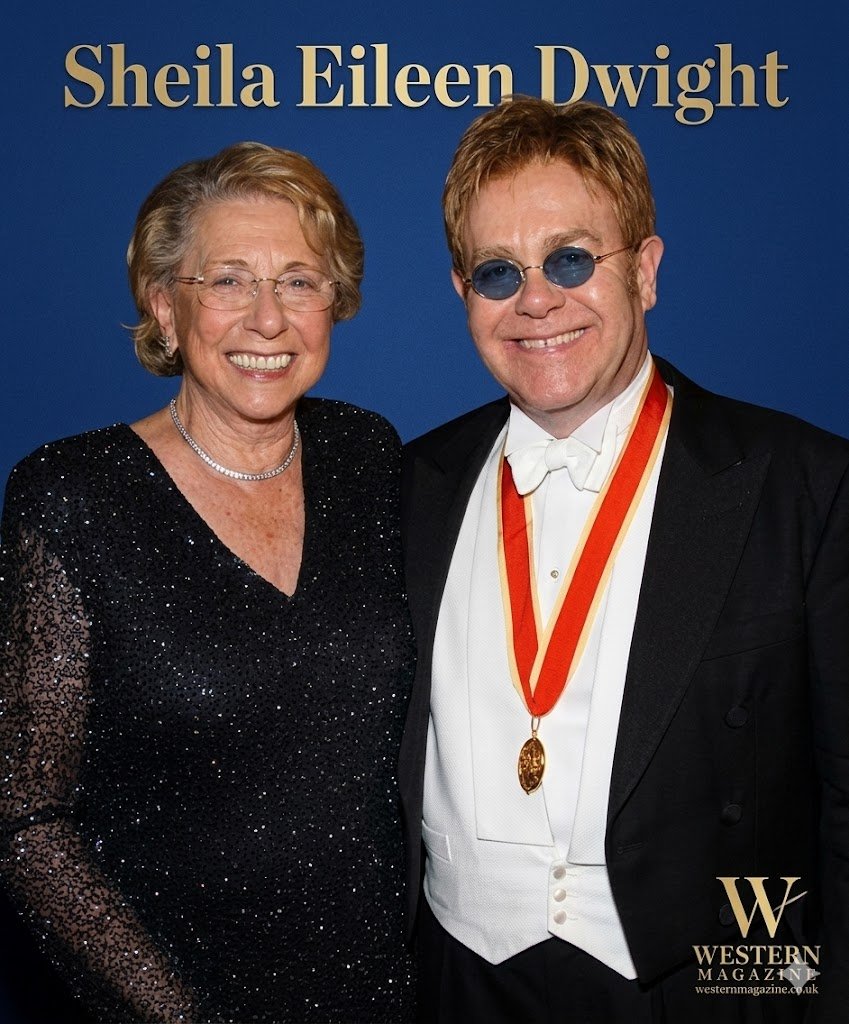
Sheila Eileen Dwight
Introduction
Sheila Eileen Dwight, the mother of Sir Elton John, is a figure whose influence shaped one of the most iconic music careers of the 20th century. Though she lived largely out of the public spotlight, her life — marked by love, challenge, conflict, and reconciliation — played a critical role in forming the person who would become a global superstar. Sheila’s story is not only about her relationship with her son but also about her resilience, her personal journey, and the indelible mark she left on those around her.
Early Life and Family Background
Sheila Eileen Dwight was born on March 12, 1925, in Camberwell, South London. Raised in a working-class family, she experienced the economic and social challenges of interwar London, where opportunities for women were often limited. Her father, Frederick George Harris, and her mother, Ivy White, provided a stable but modest home environment that instilled in Sheila a sense of duty, independence, and resilience.
From a young age, Sheila was known for her lively spirit, love of music, and playful nature. These qualities would later influence her household and become especially significant in nurturing her son’s creative talents. Music and dance were integral parts of her life, a source of joy and connection that she would share with her family and, eventually, with Elton John.
Marriage to Stanley Dwight Sheila Eileen Dwight
In 1945, Sheila married Stanley Dwight, a Royal Air Force officer who had served during World War II. Their marriage was emblematic of postwar Britain, when many couples sought to rebuild family life after years of global conflict. Sheila and Stanley’s early years together were marked by hope and the challenges of adjusting to domestic life.
Two years into their marriage, Sheila gave birth to Reginald Kenneth Dwight, later known as Elton John. Their home in Pinner, Middlesex, was modest but filled with music. Sheila frequently played records, encouraged young Reginald’s interest in instruments, and nurtured his early curiosity. However, the marriage itself was often strained. Stanley preferred conventional paths and discouraged Reginald’s musical aspirations, leading to tension between father and son. Despite this, Sheila remained a steadfast supporter of her child’s burgeoning talent, demonstrating early signs of the devotion that would define their relationship.
Nurturing a Young Musical Talent
Sheila’s role in Elton’s early life extended beyond traditional motherly support. She introduced him to music at home, fostering an environment where creativity was celebrated. It was Sheila who encouraged him to explore instruments, particularly the piano, and praised his progress. These early experiences helped cultivate the confidence and discipline that would define Elton’s future career.
Her encouragement was critical when Reginald won a scholarship to the Royal Academy of Music. Sheila’s belief in her son’s potential provided both emotional and practical support, laying the foundation for the artistry that would soon capture the world’s attention. Sheila’s household was a mix of musical experimentation and everyday life, giving young Reginald the space to explore his creativity while remaining grounded in family values.
Sheila Eileen Dwight Divorce and Remarriage
The Dwight marriage eventually ended in divorce during Elton’s early teenage years. The separation was a source of emotional turbulence for the family but ultimately allowed Sheila to seek stability and a more supportive environment. In 1963, she remarried Fred Farebrother, a painter whose kindness and encouragement contrasted with her first husband’s strict demeanor.
Fred provided a nurturing presence, giving Elton a sense of security and emotional support during formative years. The household encouraged creativity, and it was in this environment that Elton began forming his first bands and performing publicly. Sheila’s ability to create a supportive home, even amid past personal challenges, was central to her son’s development as both a person and an artist.
A Complicated Relationship with Elton John
Despite her early encouragement, Sheila’s relationship with Elton became complex as he achieved international fame. Differences in personality, disagreements over personal choices, and the pressures of public life created distance between mother and son. During the 2000s, disputes over family dynamics and public comments led to a period of estrangement that lasted nearly a decade.
Elton publicly described this time as difficult, stating that although he did not hate his mother, he could not allow her into his daily life. Despite the tension, Elton continued to support Sheila financially, demonstrating an enduring, if strained, familial bond. Their relationship exemplifies the challenges of balancing personal history with the pressures of fame and public life.
Reconciliation and Final Years Sheila Eileen Dwight
In 2016, Sheila and Elton reconciled after nearly eight years of estrangement. The reconciliation was marked by open communication, mutual understanding, and a renewed appreciation of their bond. This period of healing allowed both mother and son to reflect on their shared history and celebrate the life they had built together.
Sheila passed away on December 4, 2017, at the age of 92. Elton publicly expressed his sorrow and gratitude, acknowledging the influence and love that shaped his early life. The reconciliation and her passing underscored the enduring importance of family, forgiveness, and the impact of maternal support on a child’s journey to greatness.
Public Image and Cultural Portrayal
Although Sheila lived much of her life outside the limelight, her story gained international attention through the 2019 biographical film Rocketman. Portrayed by actress Bryce Dallas Howard, Sheila was depicted as a woman of warmth, complexity, and strong influence, whose early encouragement shaped Elton’s path while also illustrating the conflicts inherent in parent-child relationships.
The film highlighted Sheila’s nuanced role, portraying both her support and the challenges that came with her strong personality. Through this portrayal, global audiences gained insight into the pivotal yet often private role mothers play in the lives of extraordinary individuals.
Legacy and Influence Sheila Eileen Dwight
Sheila Eileen Dwight’s legacy is inseparable from Elton John’s life and career. She provided the foundation of love, musical exposure, and emotional support that allowed him to flourish. Beyond nurturing talent, Sheila’s life exemplifies resilience, adaptability, and the profound influence of parental guidance in shaping the character and ambitions of children.
Her story is a testament to the complexity of family relationships, illustrating how love, conflict, support, and reconciliation coexist in meaningful ways. Sheila’s impact is felt not only through her son’s music but also in the broader narrative of the human experience — showing how early encouragement can ripple across generations.
Conclusion
Sheila Eileen Dwight was more than the mother of a music legend; she was a woman of strength, complexity, and enduring influence. Her life journey — marked by love, hardship, estrangement, and reconciliation — offers a vivid portrait of family, resilience, and maternal impact. Through her nurturing, encouragement, and unwavering belief in her son’s talent, she played an essential role in the making of one of the most iconic figures in modern music. Sheila’s story remains a reminder of the quiet yet profound ways in which parents shape not only the lives of their children but the cultural legacy of the world around them.
About the Author