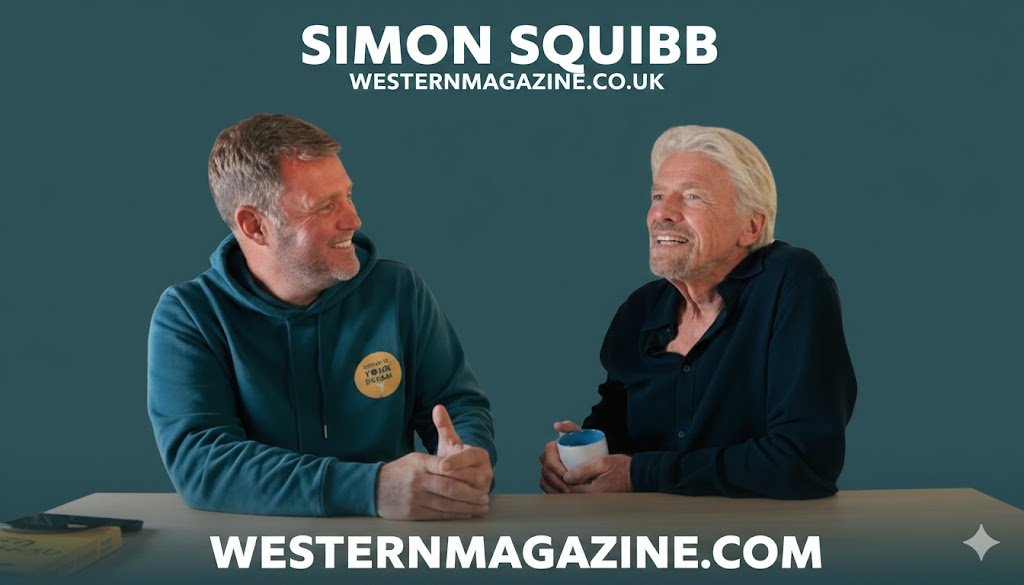
Simon Squibb
Simon Squibb british entrepreneur was born on April 16, 1974, in the United Kingdom. His early childhood was relatively ordinary, but everything changed when he was just 15 years old. After the sudden death of his father, family tensions escalated, and Simon was asked to leave home. With no financial support, no stable housing, and limited access to formal employment, he found himself homeless as a teenager.
For most people, homelessness at such a young age would be devastating beyond recovery. For Simon, it became the harsh beginning of an unconventional education. Without a National Insurance number and unable to secure traditional employment, he was forced to think creatively. Survival demanded action. He began knocking on doors offering to clean gardens and do manual labor. This was not a strategic business plan — it was necessity.
That period shaped his mindset permanently. He learned negotiation by speaking directly to homeowners. He learned resilience by hearing “no” repeatedly. He learned problem-solving because he had no other choice. These lessons would later form the foundation of the advice he now shares with millions.
Simon has often said that entrepreneurship was not a dream at first — it was survival. But survival evolved into passion, and passion evolved into purpose.
Simon Squibb Discovering Entrepreneurship as Freedom
As Simon stabilized his immediate living situation, he began to see entrepreneurship differently. What started as a means to eat became a vehicle for independence. He realized that building something of his own gave him control — control over income, over direction, over opportunity.
Unlike many entrepreneurs who follow structured business education, Simon’s knowledge came from direct experience. He understood customers because he had to serve them personally. He understood value because he had to create it from nothing. Over time, he began building increasingly ambitious ventures.
His early ventures expanded beyond basic services. He experimented, failed, adjusted, and tried again. This pattern of action — rather than waiting for perfect conditions — became one of his core philosophies. He learned that momentum matters more than perfection.
Simon Squibb Building and Selling Businesses
Over the course of his career, Simon Squibb founded nearly twenty companies across various industries. His entrepreneurial portfolio includes creative agencies, technology ventures, consultancy businesses, investment platforms, and community-driven projects.
One of his most significant successes was a creative agency called Fluid, which he built in Hong Kong. Under his leadership, Fluid grew into a respected agency working with major global brands. Eventually, the company was acquired by PwC, a major multinational professional services firm. That acquisition marked a pivotal moment in Simon’s career, providing both financial security and credibility within the business world.
Financial independence came relatively early compared to many entrepreneurs. By his early forties, Simon had achieved what many would consider traditional success: wealth, status, and business recognition. But rather than settling into retirement, he experienced an unexpected realization — financial freedom without purpose felt empty.
That realization would redefine the next chapter of his life.
Simon Squibb From Wealth to Mission: A Shift in Purpose
After achieving financial success, Simon found himself questioning the meaning behind his work. He had built companies, generated wealth, and proven his capability. Yet something was missing. The turning point came when he reflected on his own journey — from homelessness to entrepreneur — and realized that most people never receive the guidance or encouragement they need to start.
He began asking a powerful question: What if I dedicated my life to helping others build their own dreams?
From that moment, his mission became clear. Simon publicly committed to helping ten million people start businesses. This was not a marketing slogan; it became the driving force behind his new ventures.
He transitioned from primarily building businesses for himself to building platforms that empower others.
The Purposeful Simon Squibb Project and Accessible Education
During the global pandemic, when millions of people faced uncertainty about their careers and income, Simon launched The Purposeful Project. The initiative aimed to provide free tools, resources, templates, and encouragement for people wanting to start businesses.
Unlike many entrepreneurs who monetize their expertise through expensive courses, Simon deliberately made much of his guidance accessible without paywalls. His belief is simple: knowledge should not be restricted to those who can afford it. He often argues that traditional education systems are expensive and not always aligned with real-world entrepreneurship.
The Purposeful Project focuses on clarity — helping individuals identify what they care about, what problems they can solve, and how they can turn that into income. It blends mindset work with practical steps.
This initiative reinforced his identity not just as an entrepreneur, but as a mentor.
Simon Squibb HelpBnk and Community-Based Support
One of Simon Squibb’s most ambitious ventures is HelpBnk, a platform designed around the concept of “Help2Earn.” The idea behind HelpBnk is simple yet radical: anyone can request help or offer help within a supportive entrepreneurial ecosystem.
Instead of charging high fees for mentorship, HelpBnk encourages collaboration. Entrepreneurs can connect, exchange knowledge, and support one another’s growth. The platform challenges the conventional gatekeeping found in many business education spaces.
For Simon, HelpBnk represents a deeper belief: entrepreneurship should not be lonely. Too many founders struggle in isolation, and too many people with potential never begin because they lack encouragement.
By building a system where help flows both ways, Simon seeks to democratize opportunity.
Social Media Simon Squibb Influence and Global Reach
Simon Squibb’s mission gained exponential visibility through social media. Platforms such as TikTok, Instagram, YouTube, and X allowed him to share short, powerful messages with millions of viewers worldwide.
His street-interview format became particularly popular. In many videos, he approaches strangers and asks them about their dreams. When someone expresses an ambition — starting a bakery, writing a book, launching a brand — he immediately explores practical steps with them. Sometimes he offers financial support. Other times he offers strategic advice. Always, he offers encouragement.
These videos resonate because they feel real. The conversations are unscripted. The dreams are human. The message is consistent: You can start now.
His content stands out in a crowded space of business influencers because it emphasizes accessibility. Rather than presenting luxury lifestyles, he focuses on possibility.
Simon Squibb Authoring “What’s Your Dream?”
Simon Squibb expanded his influence into publishing with his book “What’s Your Dream?: Find Your Passion, Love Your Work, Build a Richer Life.” The book blends memoir with actionable advice, walking readers through mindset shifts and practical frameworks.
In the book, Simon challenges traditional career paths. He argues that many people follow scripts written by society rather than identifying their own ambitions. He encourages readers to ask uncomfortable questions about fulfillment and to take responsibility for designing their own lives.
The success of the book further cemented his role as a thought leader in entrepreneurship and personal development.
Philosophy: Fear, Risk, Simon Squibb and Action
At the core of Simon Squibb’s philosophy is the belief that fear is often misunderstood. Most people interpret fear as a warning to stop. Simon interprets it as a signal to move forward carefully but confidently.
He believes that waiting for perfect timing is a mistake. There is no ideal moment to begin. Action generates clarity. Progress builds confidence. Experience teaches faster than theory.
He frequently challenges limiting beliefs about money, education, and background. Having started with nothing, he uses his own story as evidence that starting circumstances do not dictate final outcomes.
Another cornerstone of his philosophy is purpose over profit. While he acknowledges that financial success matters, he argues that money alone cannot sustain long-term motivation. Purpose creates resilience during inevitable setbacks.
Investment Strategy and Angel Investing
In addition to mentorship and content creation, Simon is an active angel investor. He has invested in numerous startups across various sectors. His investment approach often prioritizes founders with strong purpose and authentic drive.
Rather than focusing purely on financial return, he evaluates alignment with mission. He often supports founders who want to create impact alongside income.
This approach mirrors his own journey — blending profit with contribution.
Simon Squibb Public Perception and Criticism
Like many influential figures, Simon Squibb’s attracts both admiration and skepticism. Supporters praise his generosity, authenticity, and accessibility. They see him as a rare entrepreneur willing to share insights freely.
Critics question whether viral advice can fully capture the complexity of building sustainable businesses. Some argue that entrepreneurship is harder than social media clips suggest.
Simon addresses such critiques by emphasizing action over theory. He acknowledges that building businesses involves risk and hard work, but maintains that inaction is often the greater risk.
His transparency about his own failures helps balance the narrative. He does not present entrepreneurship as effortless. He presents it as possible.
Personal Life and Values
Despite significant financial success, Simon frequently emphasizes that family and relationships matter more than business achievements. He lives in the UK with his wife and son, and often speaks about balancing ambition with presence.
This grounding adds dimension to his public persona. He is not solely defined by business metrics. He speaks openly about emotional well-being, fulfillment, and contribution.
His story reflects growth not just financially, but personally.
Legacy in Progress
Simon Squibb’s legacy is still unfolding. Yet already, his impact is measurable through millions of views, thousands of testimonials, and countless entrepreneurs who cite him as inspiration.
He represents a shift in how entrepreneurship is communicated. Instead of exclusivity, he promotes accessibility. Instead of secrecy, he promotes openness. Instead of ego-driven branding, he promotes shared success.
From a homeless teenager knocking on doors for garden work to a globally recognized entrepreneur and mentor, his journey illustrates resilience and reinvention.
Conclusion
Simon Squibb’s life story is not simply about wealth creation. It is about transformation — of circumstances, of mindset, and of mission. He began with no safety net, built businesses from necessity, achieved financial success, and then redirected his energy toward helping others achieve independence.
His philosophy centers on action, courage, and purpose. He challenges people to question conventional career paths and to design lives aligned with their passions. Through platforms, mentorship, investment, and content, he continues to push a message that resonates globally: your starting point does not define your destination.
In an era where many seek meaning beyond traditional employment structures, Simon Squibb stands as both example and advocate — proof that adversity can become foundation, and that success is most powerful when shared.
About the Author