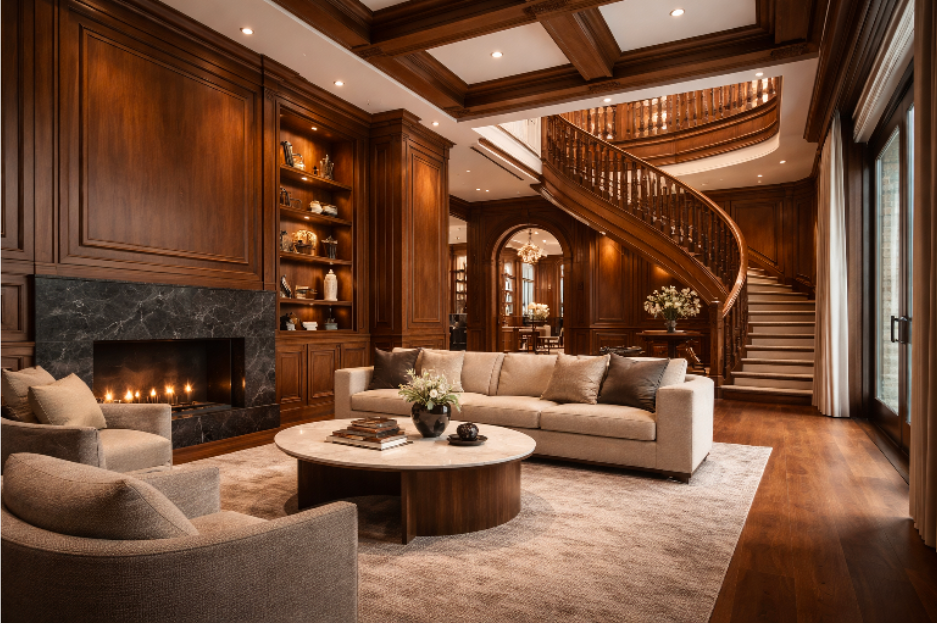
Wood Elements
Luxury interior design is often defined by the harmony between architecture, materials, and craftsmanship. While furnishings and décor contribute to the overall aesthetic, the foundational elements of a space—its architectural features—ultimately determine whether an interior feels refined, cohesive, and enduring.
Among these foundational components, custom wood elements hold a particularly significant role. From intricately crafted wall paneling and bespoke cabinetry to sculptural staircases and exposed ceiling beams, wood introduces warmth, character, and architectural depth that few other materials can replicate.
In high-end residential design, custom woodwork is more than a decorative choice. It represents a deliberate investment in craftsmanship, personalization, and long-term quality. Architects and designers frequently rely on tailored wood elements to create interiors that reflect both the identity of the space and the lifestyle of its occupants.
Understanding the role of these features helps illuminate why custom wood elements have become essential in luxury interior environments.
The Role of Craftsmanship in Luxury Interiors
Understanding Craft as a Design Language
Craftsmanship has always been central to the concept of luxury. Historically, the most distinguished interiors—from European estates to modern architectural residences—have showcased meticulously crafted materials that communicate artistry and precision.
Wood, in particular, provides an ideal medium for craftsmanship. Its natural grain, structural versatility, and adaptability allow artisans to shape it into architectural features that are both functional and visually compelling. Custom paneling, detailed moldings, coffered ceilings, and hand-finished cabinetry are all examples of how wood transforms ordinary spaces into architecturally expressive environments.
In luxury interiors, craftsmanship acts as a subtle design language. It communicates quality through the refinement of details: seamless joinery, carefully matched wood grains, and surfaces finished to highlight the natural beauty of the material.
These qualities distinguish truly high-end interiors from spaces that rely solely on decorative styling.
The Human Touch in a Highly Engineered Environment
Modern luxury homes often incorporate advanced technologies—automated lighting systems, integrated climate control, and high-performance materials. While these innovations enhance comfort and efficiency, they can sometimes introduce a sense of sterility if not balanced with tactile, handcrafted elements.
Custom wood features provide that balance. The natural warmth of wood softens architectural lines, while handcrafted detailing introduces a sense of authenticity that machine-produced materials rarely achieve.
This combination of precision engineering and human craftsmanship is what gives luxury interiors their distinctive atmosphere. When executed thoughtfully, custom woodwork becomes an integral part of the architectural narrative rather than a separate decorative layer.
The Value of Custom Wood Elements in High-End Design
Integrating Woodwork Into the Architectural Framework
One of the defining advantages of custom wood elements is their ability to integrate seamlessly into a building’s architecture. Unlike mass-produced components, bespoke woodwork is designed specifically for the proportions, scale, and structural characteristics of a space.
Wall paneling can be tailored to align perfectly with window placements and ceiling heights. Built-in cabinetry can be designed to complement architectural niches or structural columns. Staircases can be sculpted to serve as visual focal points that guide movement throughout the home.
In many luxury projects, designers rely on elements such as finely detailed moldings, bespoke cabinetry, and custom architectural millwork’s to unify structural design with interior aesthetics. These elements create continuity throughout a home, ensuring that every surface contributes to a cohesive architectural vision.
Precision, Detail, and Material Integrity
Custom woodwork also offers a level of material control that is difficult to achieve with standardized products. Designers can select specific wood species—such as walnut, white oak, maple, or mahogany—to complement the palette and character of the interior.
Equally important is the control over finishing techniques. Whether the goal is a matte contemporary finish, a richly stained traditional tone, or a wire-brushed texture that highlights the wood grain, custom fabrication allows designers to achieve precisely the look and feel required for the project.
The result is a material palette that feels deliberate and cohesive rather than generic.
Design Flexibility and Personalization
Tailored Solutions for Unique Spaces
Luxury homes rarely conform to standardized layouts. Irregular ceiling heights, expansive open-plan areas, and architecturally complex spaces often require tailored design solutions.
Custom wood elements allow architects and designers to address these challenges creatively. Built-in shelving systems can transform underutilized corners into functional storage areas. Floor-to-ceiling cabinetry can define kitchen spaces within open-plan layouts. Ceiling beams can introduce visual rhythm and structural expression in large rooms.
Because these elements are designed specifically for each project, they can respond directly to spatial requirements while enhancing the overall architectural composition.
Harmonizing Form, Function, and Lifestyle
Beyond aesthetics, custom woodwork plays a crucial role in shaping how spaces function. Luxury interiors increasingly prioritize personalization—spaces that support specific lifestyles rather than simply following conventional design formulas.
For example:
- A library may feature integrated bookshelves with hidden lighting.
- A home office might include custom desks, storage systems, and acoustic paneling.
- A kitchen could incorporate handcrafted cabinetry designed around the homeowner’s cooking habits.
These tailored solutions ensure that architectural features contribute not only to visual appeal but also to everyday usability.
When form and function are aligned through thoughtful wood design, interiors achieve a level of refinement that cannot be replicated with off-the-shelf components.
Enhancing Architectural Character and Property Value
Creating Visual Hierarchy and Spatial Identity
Architectural character often emerges through layers of detail. Without these layers, even large or well-designed spaces can feel flat and impersonal.
Custom wood elements introduce depth and visual hierarchy. Wall paneling can create a sense of rhythm across large surfaces, while ceiling beams can anchor expansive rooms and guide the eye upward. Decorative moldings provide subtle transitions between walls, ceilings, and architectural openings.
Staircases, in particular, often become sculptural centerpieces in luxury homes. A well-designed wooden staircase can function as both a structural element and an artistic statement, shaping the spatial experience of the entire residence.
These details help define the identity of each room, transforming interiors from simple living spaces into thoughtfully composed architectural environments.
Long-Term Value in Premium Real Estate
In high-end real estate markets, architectural detailing is a key factor in property valuation. Homes that incorporate high-quality materials and craftsmanship tend to command stronger market interest and retain their value more effectively over time.
Custom wood features contribute significantly to this perception of quality. Prospective buyers and design professionals often recognize the difference between standard construction and spaces that feature integrated craftsmanship.
Elements such as built-in cabinetry, detailed paneling, and handcrafted staircases signal permanence and design integrity—qualities that resonate strongly within luxury markets.
As a result, custom woodwork is not merely a design choice but also a strategic investment in the long-term value of a property.
Sustainability and Longevity of Custom Woodwork
Responsible Material Selection
Sustainability has become an increasingly important consideration in architecture and interior design. Responsibly sourced wood offers an environmentally conscious material option when compared to many synthetic alternatives.
Many designers now prioritize wood from certified sustainable forests or reclaimed sources. Reclaimed wood, in particular, introduces unique textures and historical character while reducing the demand for newly harvested materials.
In addition, advances in finishing technologies and fabrication methods allow wood elements to achieve greater durability while maintaining their natural appearance.
When sourced responsibly, wood supports both aesthetic and environmental goals in modern design.
Durability and Generational Design
Another advantage of custom wood elements is their exceptional longevity. High-quality woodwork, when properly maintained, can last for generations.
Unlike mass-produced furnishings that may require replacement over time, architectural wood features are often designed as permanent components of the structure. Paneling, built-ins, and staircases become enduring parts of the home’s architectural identity.
This durability aligns with the broader philosophy of luxury design: creating environments that remain relevant, functional, and beautiful for decades.
By prioritizing timeless materials and skilled craftsmanship, designers can create interiors that age gracefully rather than becoming outdated.
Conclusion
Custom wood elements occupy a unique position within luxury interior design. They bridge the gap between architecture and interior styling, offering both structural integration and aesthetic richness.
Through craftsmanship, material authenticity, and design flexibility, woodwork contributes to interiors that feel intentional and enduring. Paneling, cabinetry, built-ins, ceiling beams, staircases, and moldings all play a role in shaping spaces that communicate quality and individuality.
For architects, interior designers, and homeowners alike, investing in bespoke wood features represents more than an aesthetic decision. It reflects a commitment to craftsmanship, thoughtful design, and the creation of spaces that stand the test of time.
In the context of luxury interiors, custom woodwork is not simply an enhancement—it is an essential architectural element that defines the character, functionality, and long-term value of a space.
About the Author