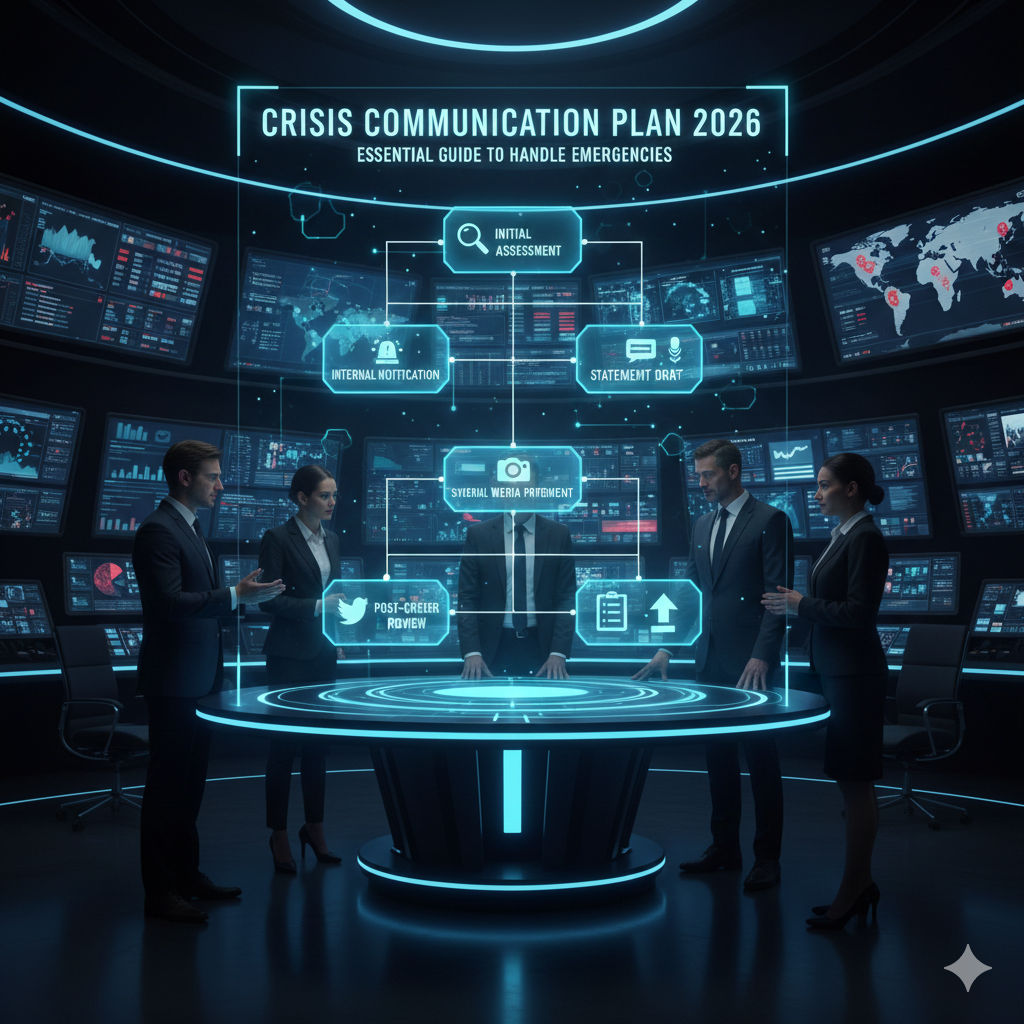
A crisis communication plan can seem good when you read it, but when a problem happens, it is ineffective if key information is missing, decision making takes too long, or people in charge say things that are not well thought out. Meanwhile, wrong information can spread very quickly on social media, worsening the situation.
A good crisis communication plan, also known as an emergency communication strategy, helps organizations act quickly, keep people safe, and protect the name of the organization. It ensures that employees, customers, and stakeholders receive clear and timely updates across all communication channels used by the organization. This is precisely the purpose of a crisis communication plan.
A crisis communication plan can seem good when you read it, but when a problem happens, it is ineffective if key information is missing, decision making takes too long, or people in charge say things that are not well thought out. Meanwhile, wrong information can spread very quickly on social media, worsening the situation. In modern organizations, crisis preparedness is also a critical part of a broader public relations strategy, where protecting reputation and maintaining stakeholder trust are just as important as operational recovery.
Why Crisis Plans Fail
Even well-prepared plans can fail due to unforeseen factors. Understanding these pitfalls helps organizations improve their readiness. Common reasons include:
- Conflicting Information: Multiple versions of events can confuse people and slow down decision-making. Stakeholders may feel stressed because it is hard to know what is true.
- Unclear Approvals: Delays or uncertainty about who can authorize messages slow response times and can escalate manageable issues.
- Off-the-Cuff Executive Statements: Leaders speaking without preparation can unintentionally worsen a crisis. Careful planning of messages is essential because executive statements carry weight.
- Social Media Escalation: Minor issues can quickly become major public concerns online. Posts can go viral, spreading misinformation thus creating pressure to respond quickly.
- Inconsistent Customer Messaging: Mixed messages erode trust and reduce confidence in the company. Clear, consistent, and fact-based communication is crucial for maintaining credibility.
A robust crisis communication plan ensures messages are calm, consistent, fact-based, and people-focused, allowing organizations to respond effectively while preserving trust.
Purpose & Goals
The main goals of a crisis communication plan are to keep people safe, maintain operations, and protect the company’s reputation. Key principles of a crisis communication plan include:
- Protecting people
- Keeping it simple
- Being honest in the crisis communication plan
- Maintaining the operations of the company
- Protecting the company’s reputation
The goals include:
- Speed: Issue public statements within 30 minutes.
- Consistency: Use one trained spokesperson across all channels.
- Accuracy: When it comes to accuracy, it is important to share information that you know is true. Do not share information you are unsure about and be clear when you do not have an answer yet. This builds trust in the information you share, and accuracy is key to building trust.
- Empathy & Honesty: Communicate clearly, humanely, and consider others’ feelings.
- Compliance: Meet legal and regulatory requirements.
- Non-goals: Avoid blame, speculation, or sharing sensitive internal information.
Crisis Definitions & Types
A crisis is something that hurts people, stops things from working as they should, and causes people to lose faith in something or someone. It can also put money and finances at risk. It can cause significant trouble for people and organizations. When we talk about a crisis, we mean a situation that affects people and can cause serious harm.
Severity Levels
Level 1: Minor issue, internal updates only.
Level 2: This is a problem that affects many customers or the general public. The public needs to be informed and kept updated about what is happening.
Level 3: Major crisis with high risk and national media coverage; full plan activation is required.
Types of Crises
- Disasters: Natural or man-made emergencies
- Technological Failures: System outages, data breaches, or technology disruptions
- Sabotage or Misinformation: Deliberate actions intended to mislead or harm the company
- Financial or Operational Issues: Events affecting revenue, operations, or business continuity
Stakeholders & Roles
It is important to identify key stakeholders, including employees, customers, regulators, partners, investors, media, and the public. Assigned roles may include:
- Incident Lead
- Communications Lead
- Legal Lead
- Customer Lead
- Social Media Lead
- Internal Communications Lead
- Executive Approver
It is recommended to have one trained spokesperson to communicate with the media during a crisis so that everyone receives the same message from the company. This is known as crisis media response. Having a single trained spokesperson is essential for maintaining clarity and consistency during a crisis.
Information, Messaging & Channels
Maintain a single source of truth with clear workflows:
Level 1: Communication Lead
Level 2: Communication and Legal
Level 3: Communication, Legal, and CEO
- Message pillars should focus on empathy and understanding, providing verified facts, outlining actions taken, giving clear instructions, and including timestamps.
- Multiple channels should be used to reach people, such as status pages, emails, social media, press releases, and hotlines.
- Collecting feedback is also important to improve message pillars and refine responses over time.
- Scenario playbooks help teams prepare for situations such as data breaches, financial crises, workplace injuries, or misinformation campaigns. These playbooks are a key part of having an effective emergency communication plan.
Summary
A strong crisis communication plan protects people, operations, and reputation. Defining roles, severity levels, templates, and stakeholder priorities is essential. Testing the plan, maintaining a single source of truth, and responding quickly with empathy and facts helps organizations navigate emergencies confidently and effectively.
About the Author