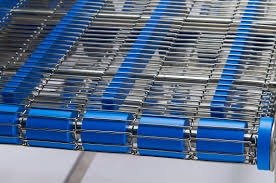
Flat Wire Belting
Flat Wire Belting is a type of conveyor belt constructed from interconnected metal wires arranged in a flat, open-mesh pattern. Known for its strength, durability, and excellent airflow properties, it is widely used in processes that require efficient material movement, consistent support, and exposure to air or heat. As production systems become more advanced in 2026, flat wire belting continues to be a reliable solution in modern conveyor technology.
At its core, flat wire belting’s is built from parallel wire strands that are joined together by cross rods. These rods pass through the flat wire sections and are secured at the edges, forming a flexible yet sturdy belt structure. The result is a lightweight but strong conveying surface capable of handling varying loads while maintaining stability during operation.
The open-mesh design is one of its most important characteristics. Unlike solid conveyor belts, flat wire belting allows air, liquids, and heat to pass through easily. This makes it particularly suitable for processes involving heating, cooling, draining, washing, or drying. Because air can circulate freely through the belt, it supports even temperature distribution and faster processing times in thermal applications.
Mechanically, flat wire belting works by looping around drive and idler sprockets. The sprockets engage with the cross rods, creating positive drive engagement. This reduces slippage and ensures accurate tracking, even under high-speed or high-load conditions. The belt’s structure allows it to flex around the sprockets while maintaining a flat conveying surface on the top side. This balance between flexibility and rigidity is essential for consistent performance.
Durability is another defining feature. Flat wire belting is typically manufactured from stainless steel or other corrosion-resistant alloys, allowing it to perform in demanding environments. It can withstand exposure to moisture, chemicals, and high temperatures without significant degradation. The strength of the metal construction also makes it suitable for heavier loads compared to many synthetic belt options.
Maintenance requirements are often lower compared to other belt types. Because of its simple mechanical design, individual sections can sometimes be repaired or replaced without changing the entire belt. The open structure also reduces the buildup of debris, which helps minimise cleaning time and prevents operational disruptions. In environments where hygiene and cleanliness are priorities, this design provides an additional advantage.
Flat wire belting is sometimes compared with other open-style conveyor solutions, such as a Rod Network Belt. While both share an open construction and similar airflow benefits, their structural configurations differ. A Rod Network Belt typically uses linked rods and side chains to create a more flexible network-style surface, whereas flat wire belting relies on straight, flat wires connected by cross rods. The choice between the two often depends on load requirements, flexibility needs, and the specific demands of the application.
In terms of performance, flat wire belting offers stability and even product support. The flat top surface helps maintain consistent contact with conveyed items, which is important when handling packaged goods, trays, or products that require balanced support. Its ability to operate smoothly at various speeds makes it compatible with both manual and automated production systems.
Energy efficiency is another practical consideration. Because the belt is relatively lightweight and features an open design, it can reduce drag within certain processing environments. Improved airflow and heat penetration may also contribute to reduced energy usage in heating or cooling operations. As sustainability continues to influence manufacturing decisions in 2026, components that support energy-conscious operations are increasingly valued.
The adaptability of flat wire belting further supports its widespread use. It can be customised in terms of width, wire thickness, pitch, and material composition. This flexibility allows engineers to tailor the belt to specific operational requirements, whether the priority is higher load capacity, finer mesh openings, or improved corrosion resistance.
In summary, flat wire belting is a durable, open-mesh conveyor solution designed for efficient material handling in environments where airflow, heat transfer, and strength are important. Its construction of flat wires and cross rods creates a stable yet flexible belt that engages positively with sprockets for reliable movement. Compared to other open conveyor systems like a Rod Network Belt, it offers distinct structural and performance characteristics that suit a range of operational needs.
As conveyor technologies continue to evolve, manufacturers such as Wire Belt contribute to the ongoing refinement of flat wire belting designs, supporting improved efficiency and reliability across modern production systems.
About the Author