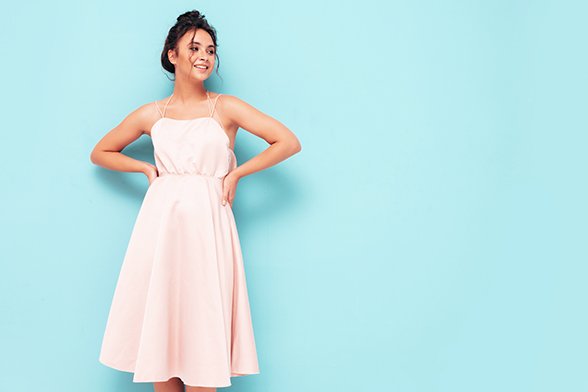
Two stylish shop assistants elegantly dressed working in menswear store.
It is one of the more common questions that comes up when women start shopping Joseph Ribkoff seriously: do you put your money into dresses, or do you build around separates? Both categories are genuinely strong in the collection, and the quality holds up across the board. But they are not interchangeable, and the one that delivers better value for you comes down to how your life is actually structured. This comparison of Joseph Ribkoff dresses vs. separates lays out the case for each so you can make a more informed call.
What Dresses Do Well
The strongest argument for a dress is also the simplest one: it is a complete outfit. One decision, one garment, done. That matters more than most people give it credit for.
Joseph Ribkoff dresses are particularly well-suited to this because they are designed to stand on their own. The brand’s Silky Knit sheaths, wrap dresses, and Scuba Crepe styles look polished without requiring a layer on top or careful accessorizing to feel finished. You can walk out the door in one and be appropriately dressed for the office, a lunch meeting, or an evening event with very little effort beyond a shoe change.
The Signature collection takes this further for occasions. Floor-length styles with chiffon overlays and embellished details are built specifically for weddings, galas, and formal events — and there is not a separates combination that replicates that kind of impact with comparable ease.
Dresses also have a practical edge when it comes to travel. A single dress occupies less space than a coordinated top and bottom, and because Joseph Ribkoff uses wrinkle-resistant fabrics throughout, pieces arrive looking the same as when they were packed. For frequent travelers, that is a meaningful advantage.
Dresses make the most sense if:
- You attend events regularly and need reliable occasion wear
- You travel often and want to minimize packing decisions
- You prefer getting dressed quickly without coordinating pieces
- Decision fatigue is a real factor in your mornings
What Separates Do Well
The case for separates is fundamentally about multiplication. One well-chosen Joseph Ribkoff blazer can pair with multiple tops. A strong pair of pull-on pants works with blouses, knits, and layering pieces across several seasons. When you start thinking in terms of cost-per-wear rather than purchase price, separates tend to win.
Joseph Ribkoff makes this case easier than most brands because its collections are designed as coordinated systems. Tops, pants, blazers, and skirts within the same seasonal release are built to pair together, which removes the guesswork from mixing pieces. The brand’s proportions and fabric weights also stay consistent enough across seasons that pieces from different collections often work together naturally.
There is also a flexibility argument. As temperatures shift, separates let you add or remove layers without overhauling your entire outfit. A Joseph Ribkoff top under a structured jacket covers a temperature range that no single dress can match. And if your size changes over time, replacing one piece of a two-part outfit is a much smaller commitment than replacing a dress entirely.
Separates make the most sense if:
- You want to build a capsule wardrobe with maximum outfit combinations from fewer pieces
- Your daily wardrobe spans a wide range of settings, from casual to professional
- You prefer layering as a styling strategy
- You are starting out with the brand and want foundational pieces that work across everything
The Honest Answer to Which Is Better
Neither category wins outright — and framing it as a competition misses the point. The most functional Joseph Ribkoff wardrobe uses both: separates as the workhorse foundation and dresses for the moments that call for a complete, effortless look.
If you are starting fresh and have to choose one direction, separates tend to deliver more versatility per dollar, especially at first. A neutral pair of pants, two or three tops, and a blazer will create more outfits than the same amount spent on dresses. But once that foundation is in place, a well-chosen dress or two for events and travel fills in the gaps that separates cannot cover as efficiently.
The specific mix depends on your lifestyle. A woman who attends two or three events a month and travels regularly will get more value from dresses earlier than someone whose daily life is mostly office and weekends. There is no universal formula — only what actually gets worn.
A Practical Starting Point
If you are building toward a well-rounded Joseph Ribkoff wardrobe and are not sure where to start, this order tends to work for most women:
- Begin with one or two pairs of pull-on pants and two or three tops in neutral tones — these become the backbone of the wardrobe
- Add a blazer that coordinates with both tops and pants
- Bring in one versatile dress for events, in a silhouette and color that earns repeat wear
- Build from there based on what you actually find yourself reaching for
The brand’s quality means these pieces will last, so what you invest in now will still be doing the work two or three years from now. That longevity is part of what makes the investment calculation worth taking seriously.
About the Author