
Order confirmations, delivery updates, verification codes and payment notifications generate a significant share of customer communication across e-commerce, logistics, financial services and healthcare.
Once transaction volume reaches hundreds or thousands of events per day, manual communication becomes impractical. Delayed notifications lead to additional support requests, while missing updates create uncertainty and increase customer effort.
A business SMS service helps automate these interactions by delivering information immediately after a transaction, status change or customer action occurs.
What is a Business SMS Service
A business SMS service enables organisations to send messages directly from business systems to mobile devices through telecom networks.
Unlike email, SMS does not depend on inbox placement, application downloads or internet access. Messages are delivered directly to a phone number, which makes SMS particularly effective for time-sensitive communication.
The channel is commonly used when information needs to reach the customer quickly and reliably. Payment confirmations, account alerts and verification codes are examples where even short delays can affect customer experience and operational efficiency.
Transactional and Promotional SMS
Business messaging typically falls into two categories.
Transactional SMS is linked to a specific customer action or business event. Examples include payment confirmations, authentication codes, booking confirmations and delivery updates.
Promotional SMS is used for marketing communication such as special offers, loyalty campaigns, product launches and seasonal promotions.
These message types often operate under different regulatory requirements and serve different business objectives.
Common Business Use Cases
The most effective SMS implementations are usually connected to existing business processes rather than standalone campaigns.
Appointment Reminders
Missed appointments affect scheduling efficiency, staff utilisation and revenue.
Healthcare providers, service businesses and consulting firms frequently use SMS reminders because a cancelled or forgotten appointment often leaves a time slot that cannot be filled on short notice.
Automatic reminders sent before a scheduled visit help reduce no-show rates and improve calendar utilisation.
Delivery and Payment Notifications
Delivery and payment updates account for a large share of customer enquiries.
Customers want to know whether a payment has been accepted, when an order has shipped and when a package will arrive.
SMS notifications provide these updates automatically. Instead of contacting support, customers receive information as soon as a status changes.
For organisations handling large order volumes, this can significantly reduce inbound requests related to order tracking and payment verification.
Automation and API Integrations
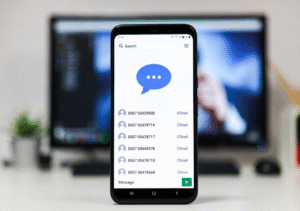
The value of SMS increases when communication becomes part of an automated workflow.
Sending notifications manually may be manageable for dozens of customers. It becomes inefficient when systems process thousands of transactions every day.
Trigger-Based Workflows
Most business SMS traffic is generated automatically through API integrations.
A successful payment triggers a confirmation message. A delivery status update generates a shipment notification. A login attempt sends a verification code. These interactions happen without manual involvement and remain connected to the systems where the original event occurred.
DID Global provides SMS infrastructure that integrates with CRM platforms, e-commerce systems, customer support environments and internal business applications, allowing communication to be automated across multiple markets.
Measuring SMS Campaign Performance
Performance data helps determine whether messages are reaching customers and producing the intended outcome.
Message volume alone provides little insight into effectiveness.
Delivery and Response Rates
Delivery reports show whether messages reached the destination and how quickly delivery occurred.
Additional indicators often include:
- response rate
- click-through rate
- delivery speed
- unsubscribe rate
- conversion rate
Transactional SMS campaigns frequently achieve delivery rates above 95%, making them one of the most dependable communication channels for operational notifications.
Performance analysis helps identify delivery issues, message timing problems and opportunities to improve customer engagement.
Legal and Compliance Requirements
Business messaging is regulated differently across countries and telecom networks.
Sender ID requirements, consent rules and message content restrictions vary by market. International communication often requires additional attention because regulations that apply in one country may not apply in another.
Promotional messaging generally faces stricter compliance requirements than transactional communication. Consent management, opt-out functionality and sender identification are often mandatory.
A business SMS service works most effectively when messaging is integrated into customer journeys and operational workflows. Appointment reminders, payment confirmations, delivery updates and verification messages reduce support workload, improve customer communication and allow businesses to automate high-volume interactions without sacrificing reliability.
About the Author