When a damaged drain is discovered, many homeowners assume the only proper repair is full pipe replacement. Others hear about relining and wonder whether it is strong enough or whether it is simply a cheaper alternative. The truth is more practical: both options have a place, and the right choice depends on the type, location and extent of the damage.
A pipe that is cracked but still holds its shape may be suitable for relining. A pipe that has collapsed, shifted badly or lost its fall may need replacement. Understanding the difference helps homeowners avoid overpaying for unnecessary excavation or under-fixing a pipe that needs more than an internal repair. This is where pipe relining Sydney assessments should begin with inspection, not guesswork.
What Full Pipe Replacement Involves
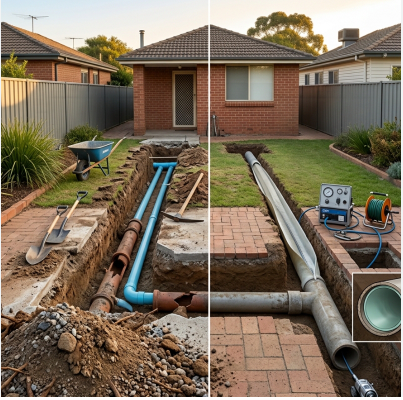
Full replacement means the damaged section of pipe is excavated, removed and replaced with new pipework. This can be the right solution when the pipe is badly collapsed, severely misaligned, undersized, incorrectly graded or beyond internal repair. It allows the plumber to rebuild the drainage section physically and correct major faults.
The trade-off is disruption. Replacement may require digging through lawns, gardens, driveways, tiled areas or concrete. There may also be reinstatement work after the plumbing repair is complete. On compact Sydney properties, access can be another challenge, particularly where pipework runs under structures or narrow side passages.
Replacement is sometimes necessary, but it should not be assumed before the pipe is inspected.
What Pipe Relining Involves
Pipe relining repairs the drain from the inside. After the line is cleared and cleaned, a resin-coated liner is inserted into the damaged pipe and cured in position. The result is a new internal surface that seals cracks, bridges damaged joints and helps prevent roots entering the repaired section.
A pipe relining plumber will usually confirm suitability with a CCTV camera before recommending this option. The existing pipe must still have enough shape and continuity for the liner to sit correctly.
The appeal is reduced disruption. Relining can often avoid large trenches, protect landscaping and shorten the impact on the property.
When Relining Is Usually Suitable
Relining may be suitable for cracked pipes, root-affected joints, leaking sections, small gaps, localised damage and ageing clay or earthenware pipework that is still structurally present. It is often considered when the damaged section sits under a driveway, garden, path or finished outdoor area that would be costly to dig up.
It can also be useful where repeated blockages are caused by roots entering through the same joint or crack. By sealing the damaged section from inside, relining addresses the entry point rather than repeatedly cutting roots away. However, relining is not chosen simply because it is convenient. The pipe condition must support it.
When Replacement Is the Better Choice
Replacement may be needed when the pipe is collapsed, crushed, severely bellied, badly out of alignment or missing sections. It may also be better where the pipe needs to be regraded, resized, relocated or connected differently as part of renovation or drainage improvement work.
If a pipe has lost its fall, wastewater may continue to sit even after lining. If a section is flattened or broken apart, a liner may not have a reliable shape to cure against. In these cases, excavation may be more disruptive but also more appropriate.
A good recommendation should explain why relining is not suitable, rather than simply dismissing it.
Common Homeowner Misunderstandings
One misunderstanding is that relining is always the cheaper option. While it can reduce reinstatement costs and disruption, the total value depends on the property, access and repair length. Another misunderstanding is that replacement is always more permanent. A replacement only solves the problem if it is installed correctly and addresses the actual cause.
Some homeowners also assume that if a drain can be cleared, it does not need repair. Clearing restores flow but does not seal cracks, correct alignment or stop roots returning.
The real question is not which method sounds stronger. It is which method properly addresses the fault shown by inspection.
What a Professional Assessment Should Include
A plumber should identify the blockage location, clear the line if required, inspect the drain with CCTV and explain the condition of the pipe. The assessment should consider material, age, root intrusion, cracks, joint displacement, pipe shape, depth, access and what sits above the damaged section.
From there, the options can be compared clearly. Relining may protect the yard and repair the fault internally. Replacement may be needed for collapsed or badly misaligned pipework. Sometimes a combined approach is best, with a small excavation at one point and relining through another.
The aim is a targeted repair, not a default method.
Conclusion
Full pipe replacement and relining are both valid repairs, but they solve different kinds of problems. Relining can be a strong, low-disruption option for suitable damaged drains, while replacement is necessary when the pipe has failed beyond internal repair.
Before choosing either, homeowners should have the drain inspected properly. A plumber can show what is happening inside the pipe and recommend the option that fixes the cause with the least unnecessary disruption.
About the Author