When it comes to facial rejuvenation surgery, results that look genuinely natural are what most patients are searching for. The fear of looking ‘done’ or unnaturally tight is one of the most common concerns people raise during consultations. In recent years, interest in more advanced surgical techniques has grown considerably – and one approach that continues to stand out for its long-lasting, lifelike outcomes is the deep plane facelift.
This article explains what the procedure involves, how it differs from more conventional approaches, and what patients considering surgery in the UK should realistically expect.
What Makes a Facelift Look Natural?
The challenge with any facelift technique is not simply removing excess skin – it is repositioning the underlying facial structures in a way that restores volume and contour without distorting the face. Older or more superficial techniques often addressed only the skin layer, which is why results sometimes appeared tight, windswept, or short-lived.
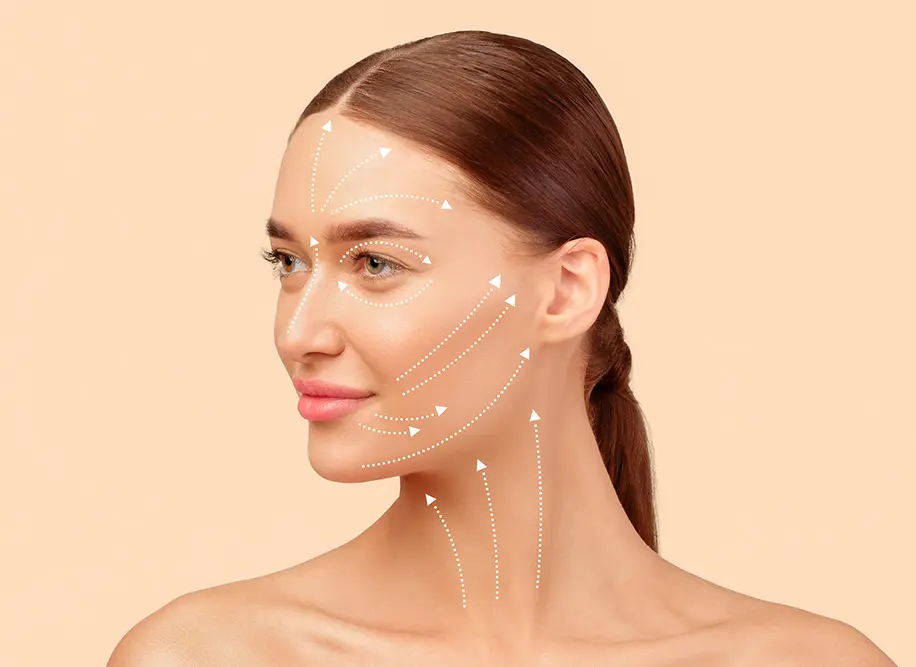
A more anatomically sophisticated approach targets the deeper structural layer of the face – the SMAS (superficial muscular aponeurotic system) – and, in the case of the most advanced technique, the plane beneath it. Working at this deeper level allows a surgeon to reposition descended facial fat, muscle, and soft tissue rather than simply pulling the skin upward. The result tends to look more balanced and youthful, because it reflects the natural way the face ages in the first place.
Understanding the Deep Plane Approach
The technique was originally described by surgeon Sam Hamra in 1990 and involves dissection beneath the SMAS layer, allowing the surgeon to release key facial retaining ligaments. This is the step that makes a significant difference to the outcome. By freeing these ligaments, the soft tissue of the face – skin and SMAS together – can be lifted and repositioned as a single unit, without placing tension on the skin surface itself. For patients exploring deep plane facelift UK options, understanding this distinction is important when comparing surgeons and techniques.
Because the closure is tension-free at the skin level, scarring tends to be less noticeable, and the results generally last longer than those achieved with more superficial methods. The technique also allows for more meaningful improvement in areas that are notoriously difficult to treat – particularly the nasolabial folds, jowls, and mid-face.
Who Is a Suitable Candidate?
The procedure is typically suited to patients who are experiencing moderate to significant facial ageing, including jowling, deep nasolabial folds, loss of definition in the jawline, and descended mid-facial volume. It is particularly well-suited to patients who want results that look refreshed rather than dramatically altered.
Candidacy also depends on general health, skin quality, bone structure, and the degree of sun damage present. A thorough consultation with a qualified and experienced surgeon is essential before any decision is made. Good candidates are usually non-smokers, in good overall health, and have realistic expectations about what surgery can and cannot achieve.
What to Expect: Surgery, Recovery, and Results
The procedure is performed under general anaesthesia and typically takes three to five hours, depending on whether a neck lift or additional procedures are performed concurrently. Incisions are carefully placed around the ears and, where necessary, along the hairline, to minimise visible scarring.
Recovery varies between patients, but most people experience swelling and bruising for two to three weeks. The majority of patients feel comfortable returning to social activities after three to four weeks, though full healing – particularly the softening of residual swelling – can take several months. The final result often becomes more apparent around the three-to-six-month mark.
Results are considered long-lasting, with many patients maintaining a meaningfully rejuvenated appearance for ten years or more. Unlike non-surgical treatments, which require regular maintenance and offer more modest improvement, this approach addresses the structural causes of facial ageing directly.
Choosing a Surgeon in the UK
Perhaps the most important factor in achieving natural-looking results is surgeon selection. The deep plane technique is technically demanding and requires considerable experience to execute well. Not all facelift surgeons offer it, and it is worth specifically asking whether a surgeon performs this approach routinely – not as an occasional variant of their standard technique.
In the UK, patients should ensure their surgeon is registered with the General Medical Council (GMC) and ideally holds membership with the British Association of Plastic, Reconstructive and Aesthetic Surgeons (BAPRAS) or the British Association of Aesthetic Plastic Surgeons (BAAPS). Before-and-after photography, patient testimonials, and peer recognition are also useful indicators of a surgeon’s track record.
Dr Dirk Kremer, based at Harley Street Aesthetics in London, is one of the surgeons in the UK who has built a particular specialism in this technique. A German board-certified plastic surgeon with decades of experience in facial rejuvenation, Dr Kremer has been recognised in Tatler’s Beauty and Cosmetic Surgery Guide and has appeared across international media. His practice on Harley Street sees patients from across the UK and internationally, many of whom specifically seek out his expertise in deep plane and vertical dual-plane techniques for their ability to produce results that are both lasting and discreet.
Is It Worth Considering?
For patients who are genuinely bothered by facial ageing and are looking for a long-term solution that delivers natural results, the deep plane approach represents one of the most advanced options currently available. It is not the right choice for everyone – the recovery is more involved than non-surgical treatments, and it carries the risks associated with any surgical procedure. But for the right candidate, the results are often described as transformative in the most understated sense: looking like yourself, only considerably fresher.
If you are considering this type of surgery, the best starting point is a detailed consultation with a surgeon who has significant experience specifically with this technique. That conversation will give you a clearer picture of what is realistic for your face, your anatomy, and your goals.
About the Author